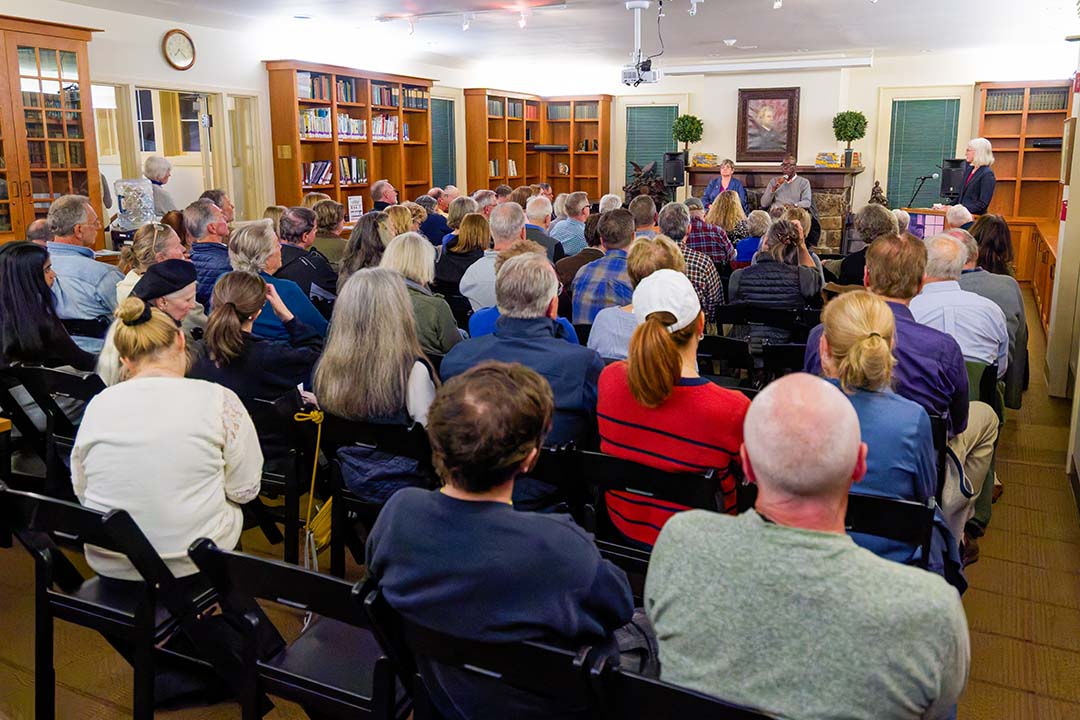
Hughes, Harris Debate
Weston Today photos
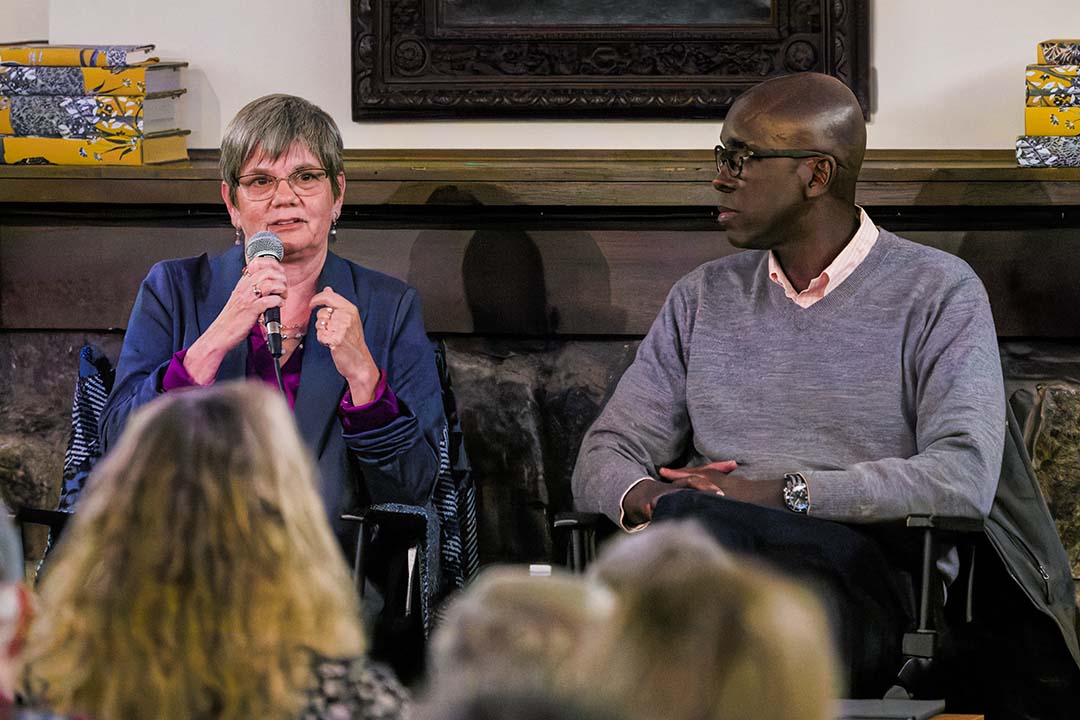
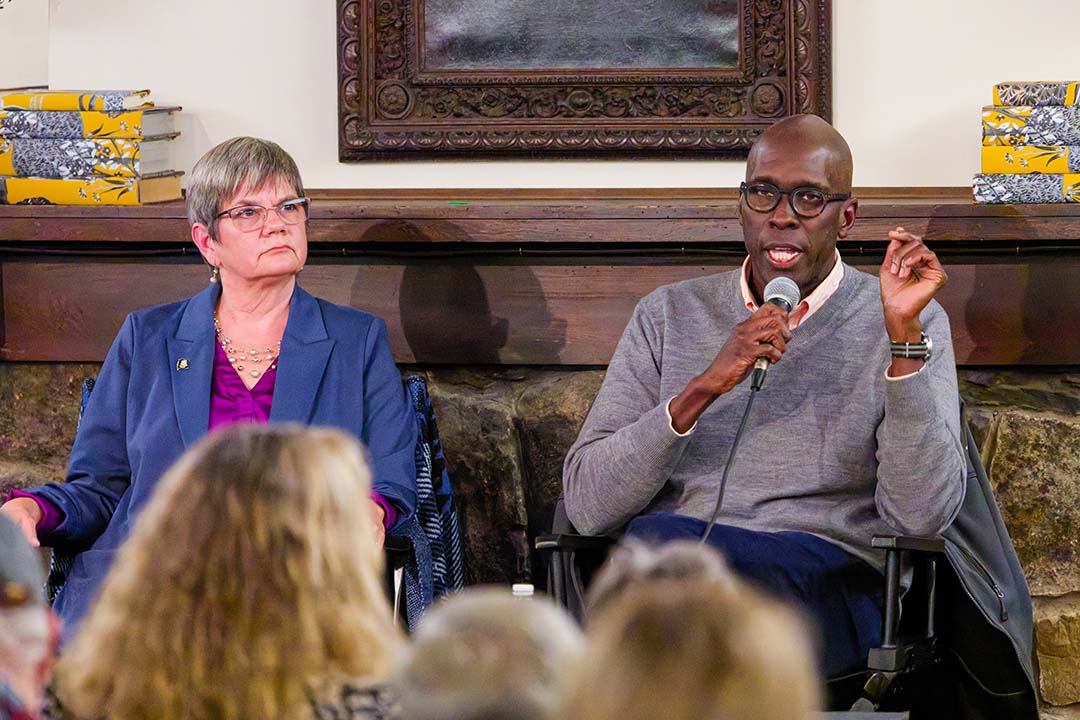
In a congenial debate on October 6, Democratic State Representative Anne Hughes and Republican Darrell Harris responded to curated questions from the audience at a League of Women Voters event at the Mark Twain Library.
Ms. Hughes is completing her fourth term representing the 135th House district, which consists of Weston, Redding, and part of Easton. Mr. Harris is the chair of Easton’s Republican Town Committee and has served on several town committees.
Asked for their views on raising taxes, the candidates agreed that taxes must be fair and that revenue must be spent wisely.
Mr. Harris said property taxes are bound to increase in towns with little or no commercial base and that Hartford should not pass costs down to municipalities.
Rep. Hughes said Connecticut is losing $2 billion in federal funding due to the administration’s cuts to programs and a tax bill that, she said, gives money to the wealthiest individuals and big corporations. She said she has been working for years in the Legislature on tax relief and abatements for the elderly and veterans.
Affordable housing
On the topic of affordable housing, Ms. Hughes said State investments will be needed to create affordable housing for groups like seniors, firefighters, and teachers because towns can’t afford it alone. She cited as an example the Gilbert & Bennett Wire Mill land, where Redding officials plan and hope to create some amount of housing. She said the property is a brownfield, and remediation will be extremely expensive.
Mr. Harris said a successful cleanup at Gilbert & Bennett would be a model for brownfield reclamation elsewhere. He said the ability to develop in Easton, Weston and Redding is limited by the amount of land being owned by water companies and that the soil beneath the Saugatuck Reservoir, which serves much of Fairfield County, is sensitive.
Mr. Harris said the region made a compact with the State, that the region would accept little or no business, low density, and higher property taxes in order to protect watershed and the water supply. In exchange, he said, the region should get credit for the watershed in the form of exemptions from State affordable housing standards.
Rep. Hughes said she has worked in the Legislature to strengthen watershed protections. However, she said, given the affordable housing crisis, until more progress is made she could introduce legislation to exempt certain towns, but it would not pass. She said the State should provide incentives and funds for towns to invest in both infrastructure and environmental protections.
Asked why accessory dwelling units do not count toward local affordable housing metrics, Rep. Hughes said they do, to an extent, with credits. She said she expects more credit will pass in the Legislature’s next session. Mr. Harris said we would advocate for doubling the current 25-year credit.
School construction, healthcare
The candidates were asked about State reimbursements for construction of a new middle school in Weston. Rep. Hughes said she has already “pitched to our governor” a rate higher than provided by statute. She said Connecticut has a good bond rating, and “we need the State’s great financial position to free up money for more reimbursements.”
Mr. Harris said the needs-based formula that provides relatively low reimbursements to affluent communities is unfair and that he would “forcefully advocate” to change it. Little of the money “that we send to Hartford comes back to us in any meaningful way,” he said. “We’ve sacrificed a lot to be able to live in a place where we don’t have businesses.”
Asked about common ground between the candidates, Mr. Harris said he briefly led a behavioral health facility, an experience that gave him a “huge insight” into the challenges involved, and acknowledged Ms. Hughes’ career in the field.
He said the two differ in the approach, where he believes “the power of the individual and the power of a town is enough to solve most problems that we have.” He said “we don’t need Hartford’s help on this,” but need volunteerism, not money.
“We cannot be isolated,” said Rep. Hughes, because everyone relies on hospitals and healthcare facilities that are not in the district’s towns. She added that all systems are supported by statewide policy, including Medicare and Medicaid. She said the healthcare system will collapse if the State does not address disparities and intervene to prevent consolidation and takeovers by private equity.
Special education, electricity
The candidates were asked whether the State should do more to address the rising costs of special education.
Mr. Harris said “yes.” He said special education is one of 1,300 unfunded mandates, and if the State mandates, the State should pay. He said that if this means State taxes must increase, so be it. “Let them take responsibility for it.”
Rep. Hughes said it is a matter of federal law that every student, regardless of their learning needs, is entitled to a free education. She said special education was supposed to have more federal investment, but under the current administration federal money is not going to education, clean water or food. She said the last legislative session provided more funds to local school districts for special education, but this is still “the next big nut we have to crack.”
On the question of what can be done about electric bills, Rep. Hughes said, “I wish I had a magic wand.” She said she joined the Energy and Technology Committee to do a “deep dive” into monopolies, protections for ratepayers, the mix of renewable energy, and the regional consortium. She said the Legislature passed reforms such as preventing ratepayer charges for energy company lobbyists and stock buybacks, but “we still have a long way to go.” She said the effort to transition to renewable energy has been stalled by the federal administration’s opposition.
Mr. Harris said, “I can’t shake the president by the lapels and say lower prices.” He said he wants to eliminate the public benefits charge. “We put that on during Covid to help people, and five years later, it’s still on there.” Mr. Harris said the transition to renewables is “a laudable goal,” but unachievable in his lifetime, because nothing is cheaper than fossil fuels.
Homelessness
Mr. Harris distinguished “situational” versus “mentally based” homelessness. In the first case, such as those out of work, he said the State could provide one-time aid. For those homeless due to mental illness, he said they should be hospitalized. There are “more than enough resources” to do that, he said.
Rep. Hughes said the State should create a non-lapsing fund to prevent homelessness, to keep someone in a rental, avoid a heat cutoff, or keep their car running so they can get to work. She said a decades-old shift from institutions to community-based services neither created enough services nor funded an “abundant” behavioral health system. “There aren’t enough providers,” she said, “and we’re barely paying them livable wages. They are on the cusp of homeless themselves.”
Priorities
Asked for his top three goals that would produce the largest financial benefit to the district, Mr. Harris first listed renewing local control and exemptions to housing targets. He said if a “national push to bring manufacturing back to the United States” could include Bridgeport, a “renaissance” there “would do more to alleviate all our problems financially than anything else.”
Rep. Hughes said her top priority is affordable healthcare. With subsidies withdrawn, she said, thousands are losing coverage and, “I don’t want anyone dying because they can’t afford insulin.” After that, she wants more State money going to towns for special education, which she said would produce “immediate property tax relief.” Finally, higher reimbursements for school construction.